7 Best Warehouse Racking Systems for Lean Logistics?

Time:2026-11-03 Author:Isabella
0%

Lean logistics is built around steady flow, reliable inventory access, and less wasted movement. Warehouse racking affects all three. A poorly matched layout can leave forklifts turning repeatedly, fast-moving products buried behind slow stock, or valuable floor space unused. Small details matter. Beam levels, aisle widths, pallet sizes, and equipment clearances shape daily work.

This guide introduces seven warehouse racking systems that can support different storage needs, from selective pallet access to higher-density arrangements. Each option involves trade-offs. Selective racks make individual pallets easy to reach, while drive-in designs can store more goods in a compact footprint but may limit access. The right choice depends on SKU variety, product turnover, load requirements, building height, and handling equipment. Support Lean Logistics with Efficient Racking Applications by matching the system to actual operating patterns, not just a space-saving target. A site assessment should consider clearances, floor conditions, load data, and safe operating procedures. These factors deserve careful review; a neat layout on paper may behave differently during a busy shift. The following overview can help teams compare practical benefits and constraints before planning a warehouse upgrade.
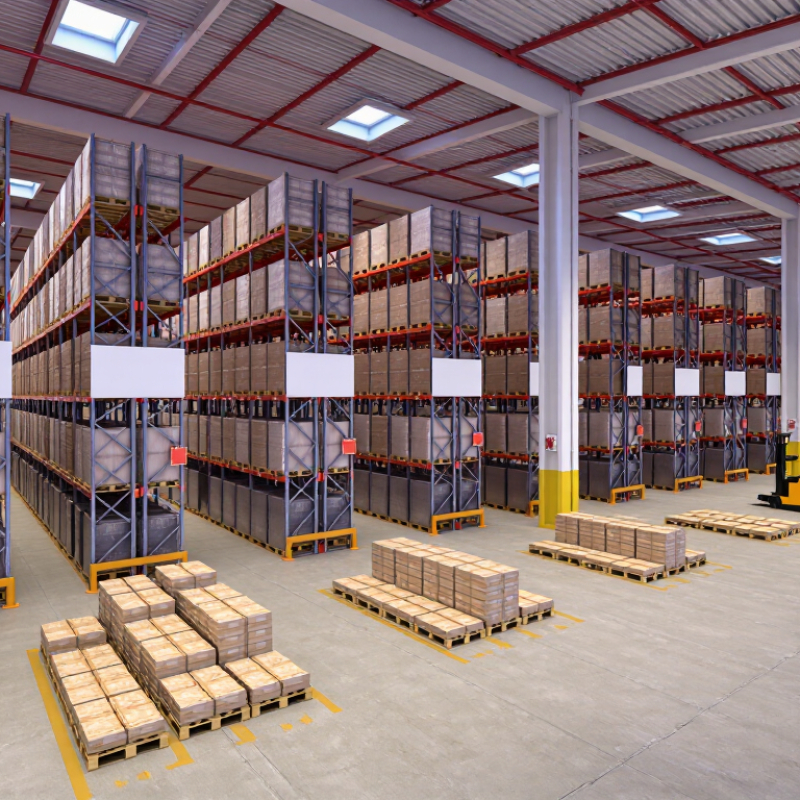
7 Best Warehouse Racking Systems for Lean Logistics?

Define Storage Needs Using 48 × 40 in GMA Pallets and SKU Velocity

A warehouse layout starts with the load, not the rack catalog. The 48 × 40-inch GMA pallet gives a useful planning baseline, but measure actual loads, including overhang, wrap, and uneven cartons. Check clearances at beams, flues, and turning points. A few inches matter when a forklift enters a busy aisle.

Then rank SKUs by order-line frequency, not just annual units sold. Fast movers need short, direct travel paths; slower items can occupy higher or more distant positions. WERC’s 2024 DC Measures report tracks order-picking performance as a key distribution-center measure, reinforcing the value of measuring how work actually moves. Count picks by SKU over a representative period, and separate full-pallet replenishment from case picking. Measure twice.

MHI’s 2024 Annual Industry Report found that 55% of surveyed organizations planned to increase supply-chain technology investment. Better data can support slotting decisions, but it cannot fix poor measurements or inconsistent SKU records. Recheck velocity after promotions and seasonal peaks. Averages can mislead. A SKU may look slow across a quarter, then empty its location in one afternoon. Use the pallet footprint, load height, weight, and replenishment pattern together before choosing selective, drive-in, or other rack configurations.

Selective Racks: 100% Pallet Access with Typical 10–12 ft Aisles

Selective pallet racks suit warehouses that need direct access to every stored pallet. Each position can be reached without moving another load, which helps reduce reshuffling during picking. In a well-planned layout, workers can locate a carton or pallet quickly. No digging through the row.

Aisles are commonly 10–12 feet wide, but the right clearance depends on the lift truck, pallet dimensions, and turning space. Measure the actual equipment path, not just the truck’s published width. A narrow aisle may add storage positions, yet create bottlenecks when forklifts meet near busy pick faces. This trade-off is easy to underestimate. Selective racks also use more floor area than some high-density systems, so they may not suit every inventory profile.

Tips: Mark aisle widths on the floor before installation and test turns with a loaded truck. Keep fast-moving pallets near dispatch, and review slot locations as demand changes. Check beam ratings and inspect connections routinely. A tidy layout still needs disciplined checks.

Double-Deep and Push-Back Racks: Compare 2-Deep Access and LIFO Storage

Double-deep racking stores two pallets behind each other, reducing aisle space and increasing storage density. A reach truck with extended forks accesses the rear position. The front pallet must move before staff can reach the one behind it. That makes this arrangement a practical fit for products with several pallets per SKU and steady turnover. Less selective, though.

Push-back racking also stores pallets several positions deep, but carts sit on inclined rails. A forklift places a new pallet at the front and pushes earlier pallets back. During retrieval, the front pallet comes out first, so the lane follows last-in, first-out (LIFO) rotation. That suits uniform loads with predictable replenishment, but not every product can follow that sequence.

In a busy warehouse, the difference shows up during picking. Double-deep lanes require equipment and operators to reach past the front position; push-back lanes rely on carts rolling forward. Both can reduce aisle requirements compared with single-deep storage. Measure pallet weight, load dimensions, and forklift clearance before choosing. Check the floor, too. Uneven surfaces or damaged carts can affect movement. A layout can look efficient on paper, yet create awkward replenishment when SKU mixes change. I’d test a representative lane with real pallets before committing; that step is easy to overlook.

Double-Deep vs. Push-Back Racking

Typical pallet depth and storage access characteristics for lean logistics planning.

Double-deep racks store two pallets deep and require specialized equipment to reach the rear position. Push-back racks use nested carts; a four-deep layout is shown here as a representative example, while actual designs commonly vary from two to six pallets deep. Both typically operate on a last-in, first-out (LIFO) basis and trade selectivity for higher storage density.

Drive-In and Pallet-Flow Racks: Contrast LIFO Lanes with FIFO Flow

Drive-in and pallet-flow racks both increase pallet density, but they move inventory differently. In a drive-in lane, a forklift enters the structure and places pallets on rails, usually retrieving the newest load first. This creates a last-in, first-out (LIFO) pattern. Space is gained. However, fewer pallet faces remain directly accessible, and drivers need room to maneuver inside each lane.

Pallet-flow racks use inclined roller tracks. Workers load pallets from one side, and gravity moves them toward the picking side. The first pallet loaded is generally the first retrieved, supporting first-in, first-out (FIFO) rotation. This can help with dated stock, but rollers need inspection, and damaged or inconsistent pallets may interrupt flow. A jam can affect an entire lane, not just one position.

The choice depends on product rotation, pallet quality, and picking rhythm. Drive-in lanes often suit large quantities of a few SKUs; pallet flow works better when reliable turnover matters. A neat spreadsheet can miss the awkward part: forklift access, replenishment timing, and real pallet condition. Test a lane with actual loads before committing to a layout. Bulk storage looks efficient on paper, but congestion at the aisle can quietly erase those gains.

Evaluate Carton-Flow and Cantilever Racks Under ANSI MH16.1 and OSHA 1910.176

7 Best Warehouse Racking Systems for Lean Logistics?

Evaluate Carton-Flow and Cantilever Racks Under ANSI MH16.1 and OSHA 1910.176

Carton-flow racks suit fast-moving cartons: inclined rollers bring the next case forward, reducing reach and replenishment steps. Cantilever racks hold long, awkward loads such as pipe, timber, or metal bar. Their open fronts help, but projecting loads need clear, marked travel lanes. Choose by load shape and pick frequency, not appearance.

ANSI MH16.1 provides design and testing criteria for steel storage racks. OSHA 1910.176(b) requires stored materials to remain stable and secure against sliding or collapse. The U.S. Bureau of Labor Statistics reported a 4.4 total-recordable-case rate per 100 full-time workers in transportation and warehousing in its 2023 Survey of Occupational Injuries and Illnesses; this sector-wide figure is not rack-specific. Still, it underlines why damaged frames, uneven loading, and blocked aisles deserve attention. A neat layout drawing can miss real-world pallet overhang. I would recheck it on the floor.

Tips: Record each bay’s load rating, inspect upright damage, and confirm floor anchors match the design. Keep cartons within flow-lane limits; secure long goods against rolling. Reassess after layout or load changes.

FAQS

What makes selective pallet racks useful?

They provide direct access to every pallet without moving another load. This can reduce reshuffling during picking. No digging. They also use more floor space than some dense systems.

How wide should warehouse aisles be?

Many layouts use aisles around 10 to 12 feet wide. The right width depends on the forklift, pallet size, and turning space. Mark the aisle on the floor and test turns with a loaded truck.

How do drive-in racks handle inventory?

Forklifts enter the lane and place pallets on rails. Loads are usually retrieved newest first, creating a last-in, first-out pattern. This suits large quantities of a few products, but access can be limited.

How does pallet-flow storage differ from drive-in storage?

Inclined rollers move pallets from the loading side toward the picking side. The first pallet loaded is generally picked first. That helps with stock rotation. Rollers need checks, and inconsistent pallets can cause jams.

When are carton-flow racks a practical choice?

They suit fast-moving cartons. Inclined rollers bring the next case forward, which can reduce reaching and replenishment steps. Check that carton sizes fit the lane.

What loads fit cantilever racks?

They hold long, awkward items such as pipes, timber, or metal bars. Open fronts help with access. Keep projecting loads clear of travel lanes, and secure items against rolling.

What should workers inspect on a rack?

Check for damaged uprights, loose connections, uneven loading, and blocked aisles. Keep each bay’s load rating visible. A tidy layout still needs regular checks.

How can a warehouse choose between rack types?

Consider product shape, turnover, pallet condition, and forklift movement. Test a lane with actual loads before settling on a design. A spreadsheet can miss congestion. I may be oversimplifying, but real pallets often tell a different story.

Conclusion

Choosing the right warehouse racking system starts with understanding pallet dimensions, SKU turnover, order profiles, and equipment needs. Standard 48 × 40 in GMA pallets offer a useful baseline for planning storage, while SKU velocity helps determine whether direct access or higher-density storage is more appropriate. Selective racks provide access to every pallet and typically use 10–12 ft aisles; double-deep and push-back systems increase density but require deeper inventory and often rely on LIFO retrieval.

Drive-in racks also use LIFO storage, whereas pallet-flow systems support FIFO movement through gravity-fed lanes. Carton-flow racks can improve access to fast-moving small items, and cantilever racks suit long or irregular loads. Compare each option by capacity, selectivity, handling equipment, and workflow, then design and operate the system with applicable ANSI MH16.1 and OSHA 1910.176 safety guidance in mind. Support Lean Logistics with Efficient Racking Applications by matching storage design to inventory behavior and day-to-day picking requirements.

Isabella

Isabella

Isabella is a dedicated marketing professional with a sharp focus on driving brand growth and engagement through strategic content creation. With an extensive background in digital marketing, she combines her passion for storytelling with her keen understanding of industry trends to deliver......