High Density Storage Rack is revolutionizing warehousing processes. In recent years, the market for these storage solutions has seen significant growth. According to a recent report by MarketsandMarkets, the global market for high-density storage systems is projected to reach $7.7 billion by 2026, growing at a compound annual growth rate (CAGR) of 5.5%.
These racks maximize storage capacity, utilizing vertical space effectively. With innovative designs, they help businesses store more in less area. This reduction in floor space, however, can lead to challenges in navigating warehouses. Some users have reported difficulties in accessing items stored at extreme heights or in tight spaces.
Implementing High Density Storage Rack systems requires careful planning. An effective layout must consider safety and efficiency. While these racks offer numerous advantages, such as increased inventory control, there are instances where improper use has resulted in accidents or damage. Businesses must continually assess their storage needs to adapt solutions effectively.
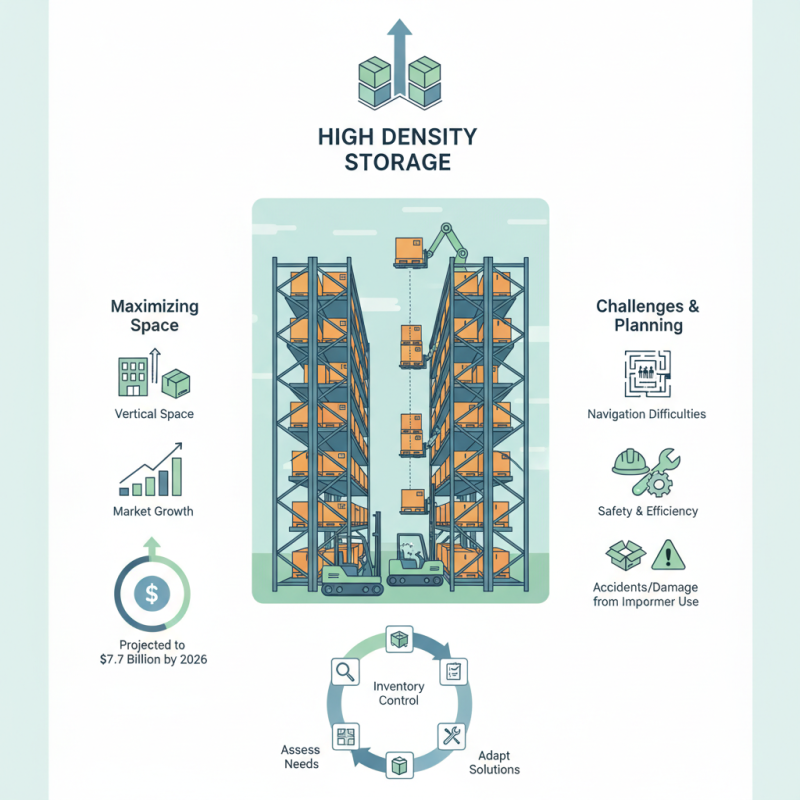
High-density storage racks are innovative systems designed to maximize space in warehouses and storage facilities. These racks hold a large quantity of products while minimizing the footprint. They typically use vertical space efficiently, allowing for better organization and easier access to items.
Many options exist for high-density storage racks. One type includes mobile shelving, which can be easily moved to create additional access aisles. Another style is the push-back rack, which allows forklifts to push pallets back on inclined rails. Both systems optimize storage while minimizing wasted space.
**Tips:** When implementing high-density storage solutions, consider dimensions and weight capacities. Make sure to evaluate the flow of goods in and out of the area. Regularly review the rack conditions to ensure safety and stability, as wear can affect performance. Simple audits can help avoid issues down the line.
| Dimension | Description | Benefits | Applications |
|---|---|---|---|
| Type | Mobile Shelving, Pallet Racking, Push Back Racking | Maximizes Floor Space | Warehouses, Distribution Centers |
| Capacity | Ranges from 1,000 lbs to over 4,000 lbs per shelf | High Weight Tolerance | Manufacturing, Retail |
| Material | Steel, Aluminum, Wood | Durability and Strength | Storage Solutions |
| Accessibility | Easy access via Forklifts, Hand trucks | Increased Efficiency | Logistics, Order Fulfillment |
| Space Utilization | Vertical and Horizontal Space | Optimizes Inventory Management | Retail, Industrial |
: High-density storage racks maximize space in warehouses. They hold many products while minimizing their footprint.
They use vertical space effectively, making items easier to access. This leads to a more organized storage area.
Mobile shelving and push-back racks are examples. Mobile shelving allows movement; push-back racks use inclined rails.
Dimensions and weight capacities are important. Evaluate how goods flow in and out of the area.
Audits help review rack conditions. They ensure safety and stability, preventing potential hazards over time.
Mismanagement leads to disarray and safety issues. It can create hazards and disrupt workflow.
They streamline inventory management and reduce retrieval times. A more organized area enhances overall efficiency.
Planning helps balance density with accessibility. It can significantly impact long-term storage success.
Untrained staff may mishandle items. This increases the risk of accidents and affects storage effectiveness.
They push businesses to rethink space and processes. Reflecting on layout can lead to better utilization.
High Density Storage Racks are specialized storage solutions designed to maximize space efficiency in warehouses and other storage facilities. These racks utilize innovative designs that allow for higher storage density by minimizing aisle space and optimizing vertical height. Key features include adjustable shelving, modular configurations, and enhanced accessibility, ensuring that items can be stored and retrieved easily.
The functioning of High Density Storage Racks involves a systematic approach, where items are organized based on size, frequency of use, and type. This step-by-step guide demonstrates how these racks streamline inventory management, leading to significant benefits such as improved space utilization, increased productivity, and reduced operational costs. Various industries, from retail to manufacturing, are adopting High Density Storage Racks to enhance their logistics and storage capabilities, proving essential for efficient management in today’s fast-paced market.

 Asia Racking