Warehouse space is expensive, but poor racking decisions can make it even more costly. Aisle widths, beam levels, pallet dimensions, and forklift routes directly influence storage density and daily productivity. Effective planning turns these details into measurable financial outcomes.
The MHI 2024 Annual Industry Report found that 55% of supply chain leaders planned to increase technology investment. That investment requires suitable physical infrastructure. The report also identified labor availability and operational efficiency as continuing industry challenges. Racking design cannot solve every warehouse problem. It can, however, reduce wasted travel and underused cubic capacity.
Gwynne Richards, a recognized warehouse management author and consultant, states, “Warehouse design should be driven by the operation, not by the building.” This principle supports the goal to Optimize Return on Space Investment Through Racking Planning. A practical plan begins with SKU velocity, pallet loads, replenishment frequency, and future growth. It then tests clearances, safety access, and equipment compatibility.
Small details matter. A poorly placed fast-moving pallet can add hundreds of unnecessary steps each shift. A missing fire-safety clearance can also undermine an otherwise efficient layout. CBRE’s Global Logistics Occupier Survey has repeatedly highlighted the pressure created by limited logistics space and rising occupancy costs. The conclusion seems obvious, but execution is not.
Some plans still focus too heavily on maximum pallet positions. That approach can fail. A dense layout may restrict access, slow picking, and increase handling damage. The better question is simple: does every rack position support profitable movement? Careful measurement, operational experience, and periodic review create a stronger return than density alone.
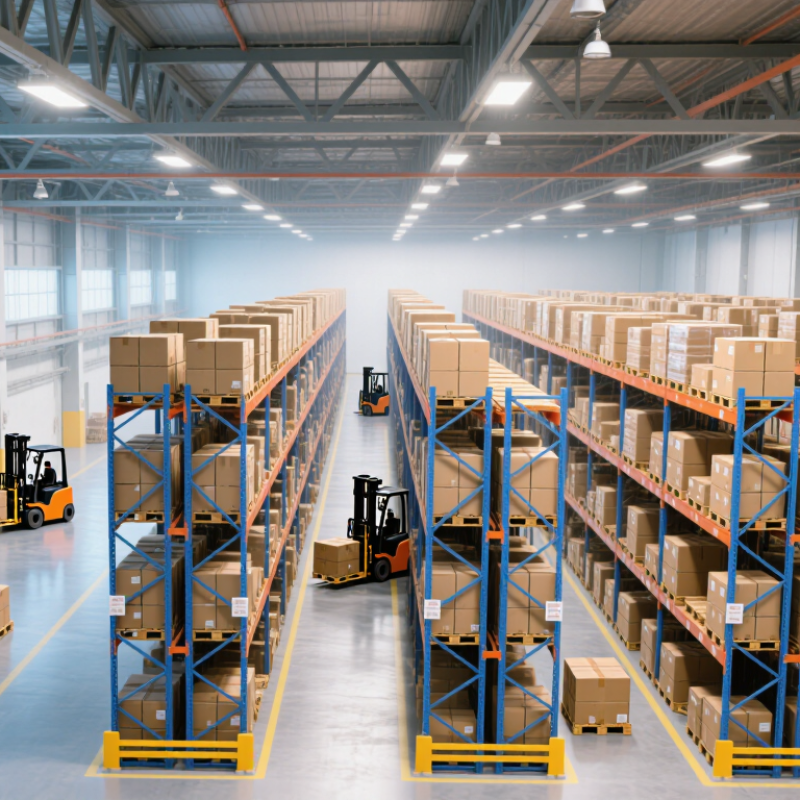
Defining ROI goals is the foundation of an effective warehouse racking plan. Start with measurable targets, not vague promises such as “better storage.” The 2024 MHI Annual Industry Report identifies labor availability as a major supply chain challenge, affecting more than half of surveyed leaders.
A practical goal could be reducing picker travel by 15%, increasing pallet positions by 20%, or lowering replenishment time by ten minutes per shift.
Translate each target into money. If a racking redesign adds 800 pallet locations, calculate the value of avoided off-site storage. If travel falls by 15%, measure saved labor hours across a typical week. Include installation, inspections, relocation, equipment, and maintenance costs. The investment may cost 120,000 dollars, while annual savings reach 42,000 dollars. That produces a simple payback period of about 2.9 years. Useful, but incomplete.
The 2023 Warehousing Vision Study reported by Zebra found that 58% of warehouse decision-makers planned to deploy automation by 2028.
Racking plans should therefore protect future flexibility, including compatible aisle widths and scalable locations. Do not overestimate growth. Our assumptions can fail when product dimensions change. Test the plan against seasonal peaks, damaged pallets, and empty locations. Review results after 30, 60, and 90 days using travel distance, storage utilization, order accuracy, and labor hours per order. Data exposes uncomfortable gaps. That is where better ROI decisions begin.
How to Improve ROI with Effective Warehouse Racking Plans?
Assessing space, inventory, and operational requirements should guide every racking decision. Measure clear height, column locations, doorways, sprinkler clearance, and floor capacity. A scaled floor plan can reveal unusable corners and traffic conflicts. Even a small obstruction can reduce storage efficiency.
Study inventory before choosing rack dimensions. Record pallet weight, load size, SKU variety, turnover rate, and seasonal changes. Fast-moving products need short travel paths and easy access. Slow-moving stock may fit higher positions, if safe retrieval is possible. Mixed inventory often needs adjustable beams rather than fixed layouts. Do not rely on average pallet sizes. They hide difficult exceptions.
Operations determine whether a dense plan works. Check receiving volumes, picking methods, forklift turning space, replenishment timing, and dispatch peaks. Aisles should support the actual equipment, not an idealized drawing. Calculate potential ROI through storage positions, labor hours, handling damage, and future expansion costs. Then test one zone with real workers and normal loads. Their movement may expose problems that software misses. Some assumptions will be wrong. That is useful evidence, not failure. Recheck load labels, rack condition, and clearance during scheduled inspections. A plan that saves space but slows picking may quietly reduce profit.
How to Improve ROI with Effective Warehouse Racking Plans?
Selecting the right racking system directly affects storage capacity, picking speed, and operating costs. In warehouse planning, I have found that the highest structure is not always the best choice. A tall system may increase pallet positions, but it can slow access when daily orders require frequent handling. Measure product dimensions, pallet weights, aisle widths, and forklift turning space before selecting a design. Consider selective racking for fast access, drive-in layouts for uniform goods, and adjustable beams for changing inventory.
Capacity must match real demand, not optimistic forecasts. Leave enough clearance for sprinklers, lighting, ventilation, and safe loading. Confirm floor strength and rack load ratings with qualified professionals. A small spacing error can create major handling delays. Accessibility also depends on product rotation. Place fast-moving items near dispatch areas, while slower stock can use deeper or higher positions. Label every location clearly and review travel paths during peak shifts.
Tips: Map one typical picking route. Time it. Then test another layout. Compare walking distance, equipment movement, and replenishment delays. Do not ignore damaged pallets or awkward cartons; they expose weaknesses quickly. I sometimes overestimate usable capacity during early planning, especially when empty spaces look efficient. Recheck the plan using occupied locations, not theoretical positions. Review rack condition regularly, train operators, and document inspections. A flexible layout may sacrifice a few spaces today, but it can protect ROI when product sizes or order patterns change.
| Racking System | Typical Storage Density | SKU Selectivity | Direct Access to Pallets | Typical Throughput Suitability | Relative Investment Level | Typical Payback Range | Best-Fit Operating Conditions |
|---|---|---|---|---|---|---|---|
| Selective Pallet Racking | 35–45% floor-space utilization | Very high | 100% | High SKU variety and frequent picking | Low | 1.5–3 years | Warehouses requiring fast access to nearly every pallet and flexible slotting. |
| Double-Deep Pallet Racking | 45–55% floor-space utilization | Medium | 50–60% | Medium SKU variety with larger order quantities | Medium | 2–4 years | Operations that can accept a limited first-in, first-out compromise to increase pallet density. |
| Drive-In Racking | 60–75% floor-space utilization | Low | Limited | High-volume, low-SKU storage | Medium | 2–5 years | Long production runs, seasonal inventory, and products stored in full pallet quantities. |
| Pallet Flow Racking | 50–65% floor-space utilization | High | Front-face access | High FIFO throughput and date-sensitive inventory | High | 3–6 years | Perishable goods, batch-controlled products, and facilities with strict FIFO requirements. |
| Push-Back Racking | 55–70% floor-space utilization | Medium | Front-lane access | Medium-to-high pallet movement | High | 3–6 years | Multiple pallets per SKU where higher density is more important than complete pallet selectivity. |
| Mobile Pallet Racking | 70–85% floor-space utilization | High | Up to 100% | High-value inventory with moderate access frequency | Very high | 4–8 years | Facilities with expensive real estate, limited expansion space, and controlled access requirements. |
| Automated Storage and Retrieval System | 80–95% cubic-space utilization | High | System-controlled | High and predictable order volume | Very high | 5–10 years | Operations with high labor costs, consistent workflows, strict inventory accuracy, and sufficient volume. |
| Planning note: Ranges are industry planning benchmarks rather than guaranteed results. Actual ROI depends on ceiling height, aisle width, pallet dimensions, SKU velocity, labor rates, equipment costs, building constraints, inventory policy, and required safety clearances. Before implementation, validate the design with a site survey, throughput study, fire-protection review, and local rack-safety requirements. | |||||||
An effective warehouse racking plan begins with safe movement, not maximum storage density. Map receiving, picking, packing, and dispatch as one continuous route. Keep pedestrian paths visibly separated from forklift lanes. OSHA estimates that powered industrial trucks cause about 85 fatalities and 35,000 serious injuries each year in the United States. A blocked sightline can therefore become a costly operational failure.
Measure pallet dimensions, load weights, turning radii, and daily travel distances before selecting rack heights. Leave clearances that match the actual handling equipment, not a simplified floor plan. Place fast-moving stock near dispatch, but avoid creating crowded intersections. The U.S. Bureau of Labor Statistics reported a 4.8 recordable injury rate per 100 full-time workers in transportation and warehousing during 2022. Safer circulation can protect people while reducing delays, damage, and avoidable labor hours.
Test the layout with a simple walking and forklift-time study. Mark proposed aisles with temporary floor tape for several shifts. Operators often reveal problems that drawings miss. That feedback matters. The 2024 MHI Annual Industry Report found that 55% of supply chain professionals planned to increase technology investment, yet technology cannot repair a poor physical layout. Review near misses, congestion points, and replenishment routes monthly. Some plans will need revision. That is normal. A slightly lower storage density may produce stronger ROI when movement becomes predictable and safer.
Improving warehouse ROI requires more than adding storage positions. The racking plan must prove its value through measurable operating results. I recommend walking the floor weekly and recording pallet locations, travel distance, picking time, and damaged inventory. During one review, a layout looked efficient on paper but created long routes around a busy staging area. The team lost several minutes per order. Numbers matter.
Review performance against the original assumptions every month. Compare storage density with space utilization, labor hours, replenishment delays, and order accuracy. Measure return on investment using installation costs, recovered floor space, and productivity gains. A rack configuration may hold more pallets but still reduce profit if it slows forklift movement. Be careful.
Refinement should follow evidence, not preference. Move fast-moving goods closer to dispatch, while reserving higher positions for stable, slower-moving stock. If congestion appears during afternoon peaks, test a small aisle adjustment before changing the entire system. Not every improvement will work. Our first relocation reduced travel distance but increased replenishment work because demand forecasts were incomplete. That mistake exposed a useful gap in the data. Record failed changes, review them with operators, and adjust the plan in controlled stages. Safety clearances, load limits, inspection records, and training should remain fixed while the strategy evolves.
Use measurable targets, such as 15% less picker travel or 20% more pallet positions. Avoid vague promises.
Calculate avoided off-site storage costs for each additional location. Include installation, inspections, relocation, equipment, and maintenance expenses.
Divide the total investment by annual savings. A $120,000 project with $42,000 yearly savings pays back in about 2.9 years.
Separate pedestrian paths from equipment lanes. Maintain clear sightlines and leave turning space for actual handling equipment.
No. Safer, predictable movement may create better returns than maximum density. Crowded aisles can increase delays and product damage.
Mark temporary aisles with floor tape. Observe walking and equipment times across several working shifts.
Track travel distance, pallet locations, picking time, space utilization, order accuracy, and labor hours per order.
Record the failure and inspect the data. Our first relocation reduced travel but increased replenishment work.
Use adaptable aisle widths and scalable locations. Test seasonal peaks, damaged pallets, changed product sizes, and empty spaces.
Review results after 30, 60, and 90 days, then continue monthly checks. Small trials are safer than full redesigns.
An effective warehouse racking plan begins by defining clear ROI goals, such as increasing storage capacity, reducing handling time, improving order accuracy, and lowering operating costs. By assessing available space, inventory characteristics, turnover rates, product dimensions, and workflow requirements, businesses can create a practical foundation for better resource utilization. The right racking system should balance capacity with accessibility, ensuring that frequently handled goods are easy to reach while maximizing vertical and floor space. Optimize Return on Space Investment Through Racking Planning by matching rack configurations to both current needs and future growth.
A well-designed layout should support smooth warehouse movement, minimize unnecessary travel, and maintain safe aisles, loading areas, and work zones. Performance should be measured through indicators such as space utilization, picking efficiency, storage density, and order-processing time. Regularly reviewing these results allows warehouse teams to refine rack placement, adjust inventory organization, and improve overall operational performance. This continuous approach helps transform racking from a simple storage solution into a strategic tool for sustainable ROI.

Asia Racking