7 Best Racking Design Tips to Improve Order Picking Speed

Time:2026-09-16 Author:Oliver
0%

Order picking speed rarely improves through effort alone. It improves when rack locations, travel paths, product velocity, and replenishment rules work together. This is the practical meaning of Improve Order Picking Speed via Rational Racking Design.

The MHI 2024 Annual Industry Report identifies workforce availability as a continuing supply chain challenge. It also reports strong investment in automation and digital tools. Zebra’s 2023 Warehousing Study found that 76% of warehouse decision-makers planned to increase modernization spending by 2028. These figures suggest a clear direction. Yet technology cannot repair a poorly arranged rack system.

John Bartholdi III, co-author of Warehouse & Distribution Science, states, “A warehouse is a building for storing inventory; a distribution center is a facility designed to move inventory.” His observation changes the design question. The issue is not simply how much stock a rack can hold. It is how quickly and safely workers can reach the right item.

A rational design places fast movers near dispatch points. It separates pedestrian traffic from replenishment activity. It also protects ergonomic picking heights and allows clear visual identification. Small details matter. A misplaced carton creates repeated walking. Repeated walking becomes hidden labor cost.

Still, no layout remains perfect. Promotions, seasonal demand, damaged stock, and inaccurate item data can weaken even a careful plan. That is the uncomfortable part. Effective design requires measurement, testing, and revision. The following seven tips examine those decisions through practical warehouse experience, recognized research, and operational evidence.
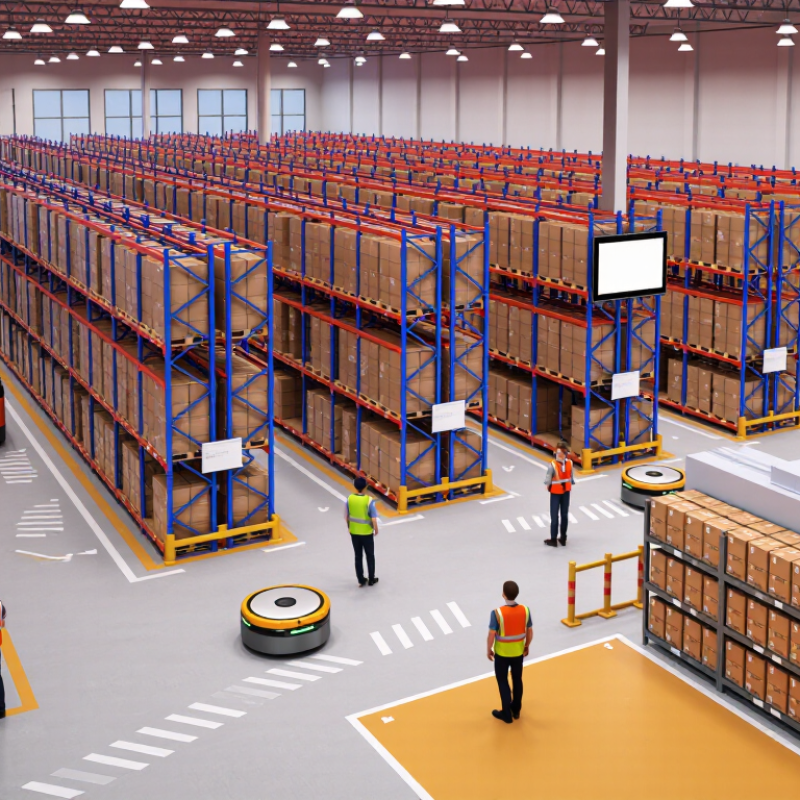
7 Best Racking Design Tips to Improve Order Picking Speed

Assess Order Picking Needs Before Choosing a Rack Layout

A rack layout should follow order-picking behavior, not visual preference. Assess the operation before selecting rack type, aisle width, or storage height. Review at least four weeks of order data, including order lines, SKU velocity, product dimensions, and replenishment frequency. Peak hours expose weaknesses.

Fast-moving items should sit near packing or dispatch areas. This reduces walking and helps pickers complete more orders per hour. Place heavy cartons between knee and shoulder height to reduce handling strain.

Small, frequently picked items may need compact locations with clear labels. Seasonal products require flexibility, not permanent prime space.

Measure the real work. Observe pickers during busy periods and record travel distance, congestion, mis-picks, and replenishment delays. A layout that looks efficient on paper can fail when two carts meet in a narrow aisle.

One common mistake is prioritizing storage density over access speed. More racks do not always mean better performance. If products vary widely in size, a single rack configuration may create wasted space and awkward reaches.

Test a small zone before expanding the design. Ask pickers where delays occur; their feedback often reveals problems that reports miss.

Data should guide the decision, but direct observation keeps the plan realistic. Review the layout after major product, staffing, or order-profile changes. Warehouses rarely remain predictable for long.

Design Rack Locations for Fast and Clear Product Access

Fast order picking begins with clear rack locations, not expensive equipment. Place high-frequency items between knee and shoulder height. Keep them near packing stations and main travel aisles. Store slow movers higher or farther away. This reduces walking, bending, and search time. The 2024 MHI Annual Industry Report found that 55% of surveyed supply-chain professionals use cloud computing, while 36% use robotics and automation. These tools work better when every rack position already has a logical purpose.

Give each location a short, visible address. Use a sequence such as aisle, bay, level, and position. Large labels should face the picker’s approach. Add barcode identification at eye level, but do not hide it behind beams or cartons. Maintain consistent product orientation. A picker should confirm the location within seconds. The 2023 Warehousing Vision Study reported that 73% of warehouse decision-makers planned to increase modernization efforts by 2026, making accurate location data increasingly important.

Test the design with real pickers during a busy shift. Their feedback often exposes blocked aisles, confusing labels, or unsafe reaches. Our first slotting plan looked efficient on paper, but bulky cartons created delays near the turns. We changed the rack depth and separated fragile items from fast-moving stock. Perfect layouts do not exist. Review travel time, mis-picks, and replenishment frequency every month. Small location changes can produce measurable gains, but only when the data remains honest.

7 Best Racking Design Tips to Improve Order Picking Speed - Design Rack Locations for Fast and Clear Product Access
No. Racking Design Tip Recommended Design Action Practical Design Parameter Expected Picking Benefit How to Measure
1 Place Fast-Moving SKUs in Prime Picking Locations Position the highest-frequency items in the primary pick zone, close to the packing or dispatch area. Use order-history data to classify stock by pick frequency rather than by product name or supplier. Store the fastest-moving items between knee and shoulder height where possible. Use ABC analysis and review the classification regularly. Reduces walking distance, bending, reaching, and replenishment disruption for frequently picked products. Picks per labor hour; average travel distance per order
2 Use Slot Sizes That Match the Product and Order Profile Assign each SKU to a dedicated rack location with enough capacity for its normal inventory level and picking container. Avoid placing small products in oversized bays. Maintain usable clearance around the product and keep the pick face large enough for easy identification and replenishment. Exact clearance depends on carton dimensions, handling equipment, and rack specifications. Improves product visibility, reduces searching, and prevents mixed or unstable storage. Slot utilization; replenishment frequency; mis-pick rate
3 Create a Clear One-Way Picking Flow Organize rack rows, cross-aisles, and staging areas so pickers can follow a consistent route with minimal backtracking. Separate pedestrian paths from vehicle traffic where required. Keep aisles unobstructed and size them for the intended equipment, load dimensions, turning radius, and required operating clearances. Final aisle width must follow local regulations and the equipment manufacturer’s guidance. Reduces congestion, unnecessary turns, and opposing picker movement during busy periods. Travel time per order; congestion events; route distance
4 Use Consistent Location Coding and Large Labels Apply a logical location sequence based on zone, aisle, bay, level, and position. Place labels where they can be read from the normal approach direction. Use high-contrast labels, consistent numbering, scannable barcodes, and a unique identifier for every pick location. Do not reuse an active location code for a different physical position. Speeds visual search and scanning while reducing location-related picking errors. Search time per line; scan failure rate; location error rate
5 Separate Picking Stock from Reserve Stock Use accessible forward-pick locations for daily order fulfillment and reserve rack positions for bulk inventory. Replenish the forward area during planned low-volume periods. Set minimum and maximum quantities for each forward-pick slot based on demand, case pack, lead time, and available space. Use a replenishment trigger before the pick face reaches an empty or difficult-to-access level. Prevents pickers from interrupting orders to search for reserve stock or wait for replenishment. Stockout rate at pick face; replenishment response time; picker idle time
6 Group Products by Order Affinity Place products that are frequently ordered together in nearby rack locations while maintaining safe and logical storage rules. Analyze order-line combinations before changing slot assignments. Use order-frequency data to identify common product associations and review the layout after seasonal or assortment changes. Do not store incompatible, hazardous, or temperature-sensitive products together solely for convenience. Reduces the distance between related picks and supports faster multi-line order completion. Lines picked per route; average order travel distance; batch completion time
7 Design for Ergonomics, Safety, and Product Visibility Keep frequently handled products within comfortable reach, provide stable storage, and maintain clear sightlines to labels and product faces. Remove damaged pallets, beams, and containers from service. Follow applicable rack-load limits, inspection requirements, manual-handling guidance, and fire-protection clearances. Rack configuration and load capacity must be verified by a qualified designer or engineer. Supports consistent picking speed, reduces handling strain, and lowers the risk of product damage or unsafe work. Incident rate; damage rate; pick rate by location height; ergonomic observations

Use Slotting Rules to Place High-Demand Items Strategically

High-demand items should earn the easiest locations in a rack, not simply the most visible ones. Use recent order history to classify products by pick frequency, velocity, cube, and handling risk. A practical ABC analysis often places A-items between knee and shoulder height, near packing stations, with clear travel paths. Keep fast movers close together when customers frequently order them in the same basket. This reduces walking and unnecessary cross-aisle movement.

The 2024 MHI Annual Industry Report found that 55% of supply chain professionals planned to increase investment in inventory and network optimization. That focus supports disciplined slotting, but the rule is not sacred. I have seen a small item become a slow mover after one seasonal campaign. Review slot assignments weekly, then compare travel distance, replenishment touches, mis-picks, and lines picked per labor hour. WERC benchmarking research also identifies order picking as a major warehouse labor-cost driver, so even a few seconds saved per line can matter at scale. Measure the real result.

Leave space around high-demand stock for replenishment carts and safe access. Store heavy cartons low, and avoid placing fragile products beneath dense case goods. A simple location label should show item code, description, unit quantity, and a scannable identifier. Do not overload the best slots. Sometimes two medium-velocity items outperform one extreme fast mover when order profiles change. That detail is easy to miss.

Improve Aisle Flow, Safety, and Picking Accuracy

A well-designed rack layout can make order picking faster, safer, and more accurate. Keep high-demand products near packing stations, but protect them from congestion. Separate pedestrian routes from equipment lanes with clear floor markings. Aisles should provide enough clearance for turning, replenishment, and emergency access. Narrower is not always better. One cramped corner can delay an entire shift.

Tip 1: Group products by picking frequency and order connection. Place commonly purchased items within easy reach, while bulky goods stay on lower levels. Use visible location labels on every beam and shelf. During a warehouse review, test the route with an empty cart and a full cart. The difference can expose problems that a drawing misses. Our first layout looked efficient, but workers repeatedly crossed the same aisle.

Tip 2: Add physical protection at rack ends and busy intersections. Keep pallets stable, inspect damaged frames, and remove loose packaging from walking paths. Tip 3: Verify each pick with location codes, product descriptions, and quantity checks. Lighting matters, especially beneath upper shelves. A small error can become a costly reshipment. Review picking data weekly, but also ask employees what feels awkward. Their feedback may reveal a safety risk before an incident occurs.

7 Best Racking Design Tips to Improve Order Picking Speed

Improve aisle flow, safety, and picking accuracy with practical warehouse layout improvements.

The chart presents non-branded planning benchmarks showing the estimated reduction in picker travel time that can be targeted through common racking and warehouse layout improvements. Actual results depend on SKU velocity, order profiles, aisle dimensions, equipment, and workforce practices.

Review Rack Performance and Adjust the Layout Regularly

7 Best Racking Design Tips to Improve Order Picking Speed

Review rack performance regularly, not only after a major warehouse problem. In daily operations, small delays often reveal larger layout issues. Track pick time, travel distance, replenishment frequency, and missed locations. Compare these figures by aisle and shift. A rack with high capacity may still slow workers when popular items sit too far away. Watch the actual movement. Reports alone can hide practical problems.

Tips: Place fast-moving items between waist and shoulder height. Keep heavy cartons on lower levels. Separate replenishment paths from active picking areas where possible. Mark damaged beams, unstable loads, and blocked access immediately. Short routes matter.

Adjust the layout when order patterns change. A seasonal product may need a temporary position near packing stations. Keep enough clearance for safe turning, lifting, and equipment movement. Test one small change before moving an entire section. Measure the result for several working days. An adjustment that looks efficient may increase congestion elsewhere. We have seen layouts improve walking time but create longer replenishment queues. That mistake is easy to make. Review both tasks together. Ask pickers what slows them down, because their experience often exposes details missed during planning. Record each change, its reason, and its measured effect. This creates a reliable improvement cycle and supports safer, faster decisions.

FAQS

How should high-demand items be placed in a warehouse?

Place them between knee and shoulder height, near packing stations. Keep travel paths clear. Easy access matters more than visibility alone.

Which data helps determine the best storage locations?

Review pick frequency, product velocity, size, and handling risk. Compare travel distance, replenishment touches, mis-picks, and lines picked per labor hour.

Should fast-moving products always receive the best slots?

Not always. Seasonal demand can change quickly. Review slot assignments weekly and adjust them when order patterns shift.

How can product grouping reduce walking time?

Store frequently ordered products near one another. This reduces cross-aisle movement and repeated trips with a cart.

Where should heavy or fragile products be stored?

Keep heavy cartons on lower levels. Do not place fragile products beneath dense case goods. Protect products from falling or crushing.

What should a useful storage location label include?

Show the item code, description, unit quantity, and a scannable identifier. Make labels visible on every beam and shelf.

How can a warehouse improve aisle safety and flow?

Separate pedestrian routes from equipment lanes with clear floor markings. Leave room for turning, replenishment, and emergency access. Narrower is not always better.

How can picking accuracy be improved?

Verify the location code, product description, and quantity at every pick. Good lighting helps, especially beneath upper shelves. Small errors grow expensive.

What should employees check during a layout review?

Test routes with both empty and full carts. Ask workers what feels awkward. Their feedback may reveal a risk before an incident occurs.

What common slotting mistake should managers avoid?

Do not overload the best locations with one extreme fast mover. Two medium-velocity items may perform better when order profiles change. I have missed this before.

Conclusion

Improve Order Picking Speed via Rational Racking Design by first assessing order volume, product variety, picking methods, and handling requirements. A suitable rack layout should support clear product visibility, convenient access, and efficient movement between storage and dispatch areas. Rack locations should be arranged to reduce unnecessary travel, prevent congestion, and make frequently selected items easy to reach. Applying practical slotting rules can further improve productivity by placing high-demand, fast-moving products in the most accessible positions while storing slower-moving items in less central locations.

An effective design must also support safe aisle flow and accurate picking. Clearly defined pathways, appropriate rack spacing, readable labels, and logical product grouping can reduce confusion and picking errors. Since order patterns and inventory levels change over time, rack performance should be reviewed regularly. By tracking travel distance, picking time, error rates, and space usage, businesses can adjust rack positions and layout plans to maintain smooth operations and achieve lasting improvements in order fulfillment efficiency.

Oliver

Oliver

Oliver is a seasoned marketing professional with a wealth of expertise in driving brand awareness and engagement. With a deep understanding of our company's product offerings, he consistently delivers high-quality content that enriches our professional blog. His insights not only shed light on......