In today's fast-paced supply chain environment, businesses face constant pressure to adapt. Supply chain flexibility is crucial for maintaining a competitive edge. One effective solution is to enhance supply chain flexibility with modular racking systems. These systems offer adaptability, enabling warehouses to respond quickly to changing demands.
Modular racking allows for easy reconfiguration. This flexibility minimizes downtime during transitions. Companies can scale their operations efficiently, aligning storage solutions with inventory needs. Such systems can reduce costs associated with traditional racking, while improving space utilization. Moreover, they support diverse product types, enhancing overall efficiency.
However, challenges may arise. Not all businesses may fully understand the benefits of modular racking. The initial investment can seem daunting. Yet, the long-term advantages often outweigh these concerns. Ultimately, choosing modular racking can transform your supply chain, ensuring resilience in the face of uncertainty.
Benefits of Modular Racking in Enhancing Supply Chain Flexibility
Modular racking systems are gaining popularity for their ability to enhance supply chain flexibility. According to the Material Handling Institute, companies that adopt modular solutions can see efficiency improvements of up to 30%. This adaptability allows businesses to respond quickly to changing demands. For example, when product lines shift, modular racks can easily be reconfigured. This minimizes downtime and maximizes warehouse space.
A report from the Warehousing Education and Research Council highlights that modular racking reduces storage costs by as much as 20%. This cost-effectiveness makes it viable for many businesses, from small retailers to large enterprises. Furthermore, with modular systems, companies can scale operations without extensive remodeling. The ease of installation is another significant advantage. Modular systems can be set up in a matter of days, compared to traditional solutions that may take weeks or months.
Despite their benefits, modular racking systems require ongoing evaluation. Companies should regularly assess the use of their space and the design of their racks. Misalignment with operational needs can lead to inefficiencies. Thus, it is crucial to create a balance between flexibility and structure. Investing in training for staff on proper use can significantly improve overall effectiveness. In the end, the right approach to modular racking can greatly influence supply chain success.
Space Optimization: How Modular Racking Utilizes Warehouse Areas Efficiently
Modular racking systems offer a vital solution for space optimization in warehouses. These systems can be adjusted to fit various warehouse layouts and size constraints. This flexibility allows businesses to maximize their storage capacity. By using modular racking, operators can create specific zones for different products. This targeted approach reduces clutter and enhances organization.
One of the significant benefits of modular racking is its scalability. As inventory needs change, businesses can easily reconfigure their racking systems. This adaptability means that the layout can evolve without needing a complete overhaul. Additionally, modular racking can make it easier to access products. This can shorten fulfillment times and improve overall efficiency. However, not all warehouses may benefit equally from this system. Some operations might face challenges in the initial setup phase, needing careful planning.
Incorporating modular racking is not always seamless. Operations might encounter issues with load requirements or space limitations. It’s essential to evaluate specific needs before implementation. Balancing flexibility with traditional storage methods can be tricky. Regular assessments can help refine the systems in place. Mainstream adoption of modular racking may require continuous learning to address evolving demands. Exploring these options is crucial for long-term operational success.
Scalability: Adapting Modular Racking to Changing Business Needs
Modular racking systems are transforming supply chain operations. Their scalability is a key advantage for businesses facing fluctuating demands. According to a report by the Warehousing Association, 74% of companies recognize that flexible racking solutions improve space utilization. A modular system allows facilities to adjust layouts quickly, responding promptly to market changes.
For example, a company might experience seasonal spikes in product volume. With modular racking, they can easily expand their storage capacity by adding or rearranging sections. This adaptability minimizes downtime and optimizes workflow. Research from Logistics Management shows that 30% of businesses have reported increased efficiency due to adaptable racking solutions.
However, issues can arise. Not all modular systems integrate seamlessly with existing infrastructure. Miscalculations in design can lead to inefficient use of space. Regular evaluations and adjustments may be necessary. Firms should invest in thorough assessments before implementation to avoid potential pitfalls. In this dynamic environment, maintaining flexibility through racking is not just an advantage but a necessity for operational success.
Ease of Installation and Reconfiguration for Dynamic Operations
Modular racking systems are ideal for dynamic supply chains. Their design allows for easy installation. This capability aids businesses in quickly adapting to changing requirements. When demand spikes, racking can be reconfigured in a matter of hours. Flexibility is crucial in logistics, especially during peak seasons or unexpected changes.
Consider these tips when implementing modular racking:
- Assess your space before installation. Knowing the layout helps maximize efficiency.
- Choose a racking system that offers scalability. This ensures it can grow with your business.
- Always leave some space for future adaptations.
An efficient racking system promotes organization. However, it might require ongoing adjustments. Regularly review your operations to identify areas for improvement. Monitoring how frequently you need to reconfigure can guide future decisions.
Flexibility is a strength, but it requires commitment and reflection.
Cost-Effectiveness of Modular Racking in Supply Chain Management
Modular racking systems offer a cost-effective solution for supply chain management. These systems are designed to adapt to various storage needs without requiring extensive renovations. Businesses can install or reconfigure racking units easily. This adaptability saves both time and labor costs. As supply chains evolve, so do the requirements for storage solutions.
Companies often grapple with high overhead costs. Traditional racking systems can be rigid and expensive to modify. Modular racking mitigates this issue. Its components are lightweight yet sturdy, meaning fewer resources are necessary for transportation and assembly. Each piece is designed to fit into a variety of configurations, maximizing space efficiency.
There’s still room for improvement in modular systems. Some users report difficulties in selecting the optimal configuration for their needs. Regular assessments are crucial for maximizing efficiency. Adapting racking systems to fit changing inventory can be challenging. Striking a balance between flexibility and cost is an ongoing concern in many warehouses.
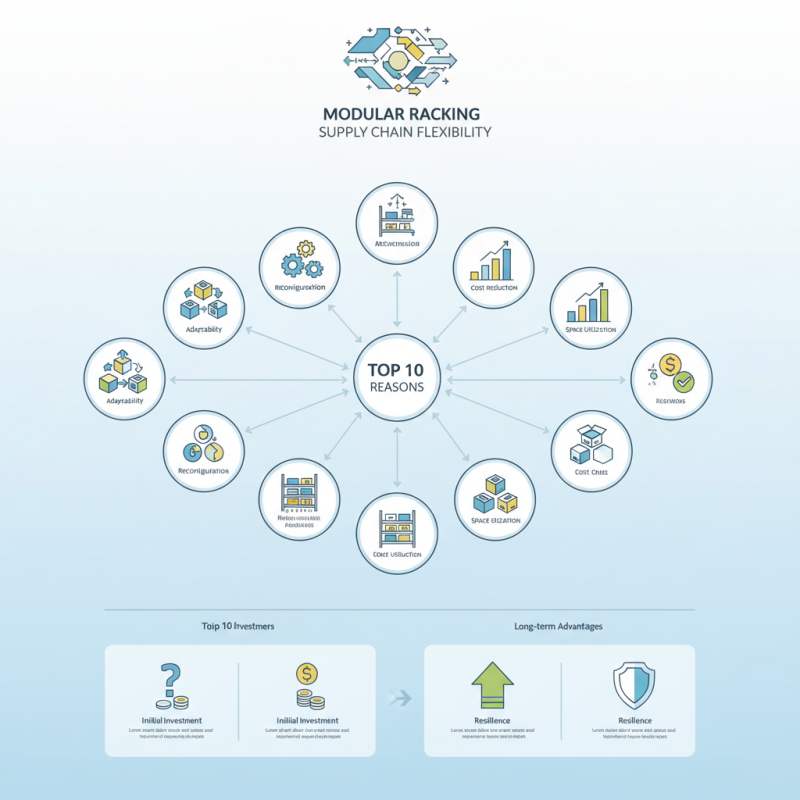
Top 10 Reasons to Choose Modular Racking for Supply Chain Flexibility - Cost-Effectiveness of Modular Racking in Supply Chain Management
| Reason |
Description |
Cost Savings (%) |
Implementation Time (Weeks) |
Flexibility Rating (1-10) |
| Scalability |
Easily adjustable to meet changing inventory needs. |
15% |
2 |
9 |
| Cost Reduction |
Lower capital expenditure by reducing long-term fixed costs. |
20% |
4 |
8 |
| Quick Assembly |
Assembly can be completed swiftly, minimizing downtime. |
10% |
1 |
10 |
| Adaptability |
Can be reconfigured as business demands change. |
12% |
3 |
9 |
| Space Optimization |
Maximizes available storage space. |
18% |
2 |
9 |
| Enhanced Productivity |
Reduces time spent on stock management. |
15% |
2 |
8 |
| Durability |
Built to withstand heavy loads and wear. |
5% |
4 |
7 |
| Reduced Labor Costs |
Less time and labor required for layout changes. |
16% |
3 |
8 |
| Environmentally Friendly |
Materials are recyclable, reducing environmental impact. |
10% |
2 |
9 |
| Increased Safety |
Designed to enhance worker safety in storage areas. |
12% |
3 |
10 |
Conclusion
Modular racking systems play a crucial role in enhancing supply chain flexibility by optimizing warehouse space and allowing for easy scalability. These systems are designed to maximize the utilization of available areas, ensuring that every inch of space contributes to operational efficiency. As business needs evolve, modular racking offers the adaptability required to adjust layouts quickly without significant downtime or costs.
Furthermore, the ease of installation and reconfiguration of these systems supports dynamic operations, allowing companies to respond swiftly to changes in demand or inventory management strategies. With their cost-effectiveness, modular racking solutions not only improve operational efficiency but also contribute to overall supply chain management. In summary, businesses can significantly enhance supply chain flexibility with modular racking systems, positioning themselves for sustained growth and competitiveness in the market.

 Asia Racking