Warehouse labor costs often grow through small, repeated delays: long walks, blocked pick faces, extra pallet moves, and replenishment that arrives too late. Efficient racking can reduce these wasted motions by placing fast-moving goods near dispatch and matching storage locations to order patterns. The gains depend on the operation, though. A new rack layout alone will not fix poor slotting or inaccurate inventory records.
Industry evidence points to the value of practical technology investment. The 2024 MHI Annual Industry Report, produced with Deloitte, found that 55% of surveyed supply chain leaders planned to increase investment in supply chain technology and innovation. Racking is not a labor-saving technology by itself, but its layout can support better use of warehouse systems, clear travel paths, and fewer unnecessary handling steps. That is measurable.
For managers seeking to Lower Labor Costs with Efficient Racking Operations, the useful questions are concrete: How far does a picker walk for a common order? How often must a pallet be moved twice? Are high-demand items stored at accessible pick heights? Reviewing these details can reveal where selective, drive-in, or carton-flow systems may fit. Yet the answer is not always more capacity. A denser layout may slow access or complicate replenishment. There is a trade-off. Careful time studies, order data, and safety reviews should guide any redesign, with results checked after installation rather than assumed.
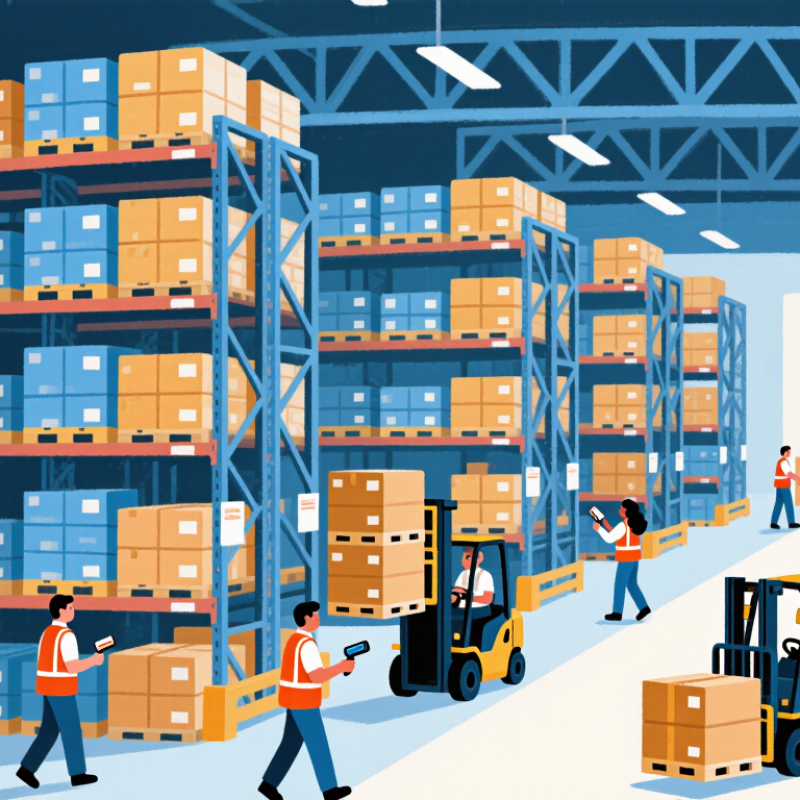
Warehouse racking shapes more than storage capacity; it affects how far workers walk, how often they bend, and how quickly orders move. Placing fast-moving cartons near packing benches can reduce repeated trips across long aisles. A well-planned layout may lower labor minutes per order without asking staff to rush. Small distances matter. But the right arrangement depends on actual order patterns, not just a neat floor plan.
Review pick records and observe a typical shift before changing rack locations. Note where workers pause, backtrack, reach above shoulder height, or wait for equipment. These small delays can add up across hundreds of picks. Measure the work. Compare travel time and orders completed before and after a layout change, while accounting for changes in staffing or order volume. A simple aisle map and a short observation period can reveal bottlenecks that software reports may miss.
Rack height and shelf spacing also influence handling time. Frequently picked items should be easy to reach, while bulky goods need enough clearance for safe, direct access. Still, moving every popular item closer to packing may crowd one aisle and create new delays. I have seen tidy plans fail when replenishment routes were overlooked. Test adjustments in a limited area, ask workers what feels awkward, and revise the layout when the daily flow does not match the plan.
Before selecting warehouse racking, observe how orders move through the building. Track receiving, put-away, picking, packing, and replenishment during a typical shift. Note where workers wait, backtrack, or cross paths with equipment. Small details matter. A blocked aisle near a fast-moving item can add repeated steps to many orders.
Review product dimensions, weight, turnover, and handling needs alongside these observations. Fast-moving cartons may belong closer to packing, while slower stock can use less accessible locations. Measure clear aisle widths, ceiling height, doorways, and turning space for forklifts or carts. Check how often replenishment interrupts picking. A storage plan that fits the inventory but restricts movement may shift labor costs rather than reduce them.
Use order history and worker feedback to test the layout before committing to major changes. A short pilot in one zone can reveal congestion or awkward pick heights. We may assume a shorter route saves time, but frequent restocking can erase that gain. Review travel distance, picks per hour, and replenishment delays together. Keep the measurements simple and repeat them across different shifts; one busy morning may not represent normal work. Some records will be incomplete. Note that uncertainty, then verify it on the floor.
Selecting racking for faster, safer handling starts with the work itself. Map each order’s route, from pallet drop-off to dispatch. Note where pickers turn, wait, or move the same carton twice. Those small delays accumulate across a shift. The best layout depends on product size, order frequency, and lift-truck type—not just pallet capacity.
Selective racks offer direct access to many product lines, while flow systems can move high-turnover cartons toward pick faces. But faster movement is not automatic. Aisles must suit the equipment, and beams must match the actual load. OSHA warehouse guidance stresses stable loads and clear aisles. BLS reported 4.8 recordable injury cases per 100 full-time workers in warehousing and storage in 2022, compared with 2.7 across private industry. This is not proof that one rack design prevents injuries; it is a reason to assess handling risks carefully.
Check sightlines at aisle ends and leave room for turning near busy pick faces. Use load labels workers can read from floor level, and inspect for bent uprights or loose anchors. Track pick time, travel distance, and near misses before and after changes. One uncomfortable truth: a denser layout may save floor space but increase congestion. Measure it in your own operation.
Efficient racking reduces labor costs when it shortens the route between receiving, storage, picking, and packing. A widely cited review by de Koster, Le-Duc, and Roodbergen in the European Journal of Operational Research estimates that order picking can account for up to 55% of warehouse operating costs. That is expensive walking. Place fast-moving items near dispatch, and keep replenishment paths clear of active picking lanes. Group products often ordered together, but verify the pattern against actual order data; assumptions about “popular” items can be wrong.
A layout should also prevent rework. Put readable labels at eye level, leave enough turning space for carts, and separate staging areas from through-traffic. WERC’s DC Measures benchmarking program tracks order-picking accuracy, a useful companion to travel-time measures when testing layout changes. Compare both metrics before and after a rack move. In practice, a tidy plan can still fail when seasonal demand shifts or replenishment blocks an aisle. Test one zone first, observe a full shift, then adjust. Small details matter: a misplaced pallet can force a picker to backtrack, while an unclear location label may send an entire tote to the wrong station.
Efficient warehouse racking can reduce walking, searching, and repeated handling, but savings should be measured before assumptions become decisions. Record labor hours for receiving, replenishment, picking, and put-away over a representative period. Track order volume and staffing levels too; a quieter week can make a layout appear more efficient than it is. Time a few common tasks, such as retrieving a fast-moving carton from a nearby pick face. Small delays add up.
Compare results after changes using the same measures and similar workloads. Useful indicators include minutes per order line, travel distance, overtime hours, and picking errors. For example, if frequently picked items move closer to packing, check whether pick times fall without increasing replenishment work. That trade-off is easy to miss. Keep the data simple enough for supervisors to review weekly, and note unusual shifts, blocked aisles, or seasonal peaks. Measurements are imperfect, but consistent records reveal patterns.
Tips: Label locations clearly, keep fast movers within practical reach, and inspect beams and aisles routinely. Re-slot items when demand changes, not just during annual reviews. Ask pickers where congestion forms; their observations can challenge the spreadsheet. Avoid packing every slot tightly. Clear access often saves more time than one extra pallet position.
Observe receiving, put-away, picking, packing, and replenishment during a typical shift. Note where workers wait or cross equipment paths.
Measure aisle widths, ceiling height, doorways, and turning space. Check whether forklifts and carts can move without blocking access.
Place frequently picked cartons near packing when practical. Keep them within easy reach, but allow enough space for replenishment.
Run a short pilot in one zone. Track travel distance, picks per hour, and replenishment delays across different shifts.
Compare labor hours, minutes per order line, travel distance, overtime, and picking errors. Use similar workloads for a fair comparison.
Not always. Frequent restocking may erase the gain, which is easy to overlook when reviewing route distance alone.
Re-slot items when demand changes, not only during annual reviews. Weekly checks may catch shifting patterns sooner.
Label locations clearly and inspect beams and aisles routinely. Keep access clear. One extra pallet spot may not be worth the congestion.
Efficient warehouse racking can reduce labor costs by making storage, picking, and replenishment easier and faster. Start by reviewing product dimensions, order patterns, inventory turnover, equipment, and current workflows. This assessment helps identify bottlenecks, unnecessary handling, and storage needs before selecting a racking system. The right configuration can improve access to goods, support safe handling, and make better use of available space.
A thoughtful layout places frequently picked items within convenient reach and creates clear travel paths, helping workers spend less time moving between tasks and correcting errors. Track measures such as picking time, travel distance, handling effort, and order accuracy to assess results. Regularly inspect racks, keep locations organized, and adjust the layout as inventory or workflows change. Together, these steps support Lower Labor Costs with Efficient Racking Operations while maintaining a safer, more productive warehouse.

Asia Racking