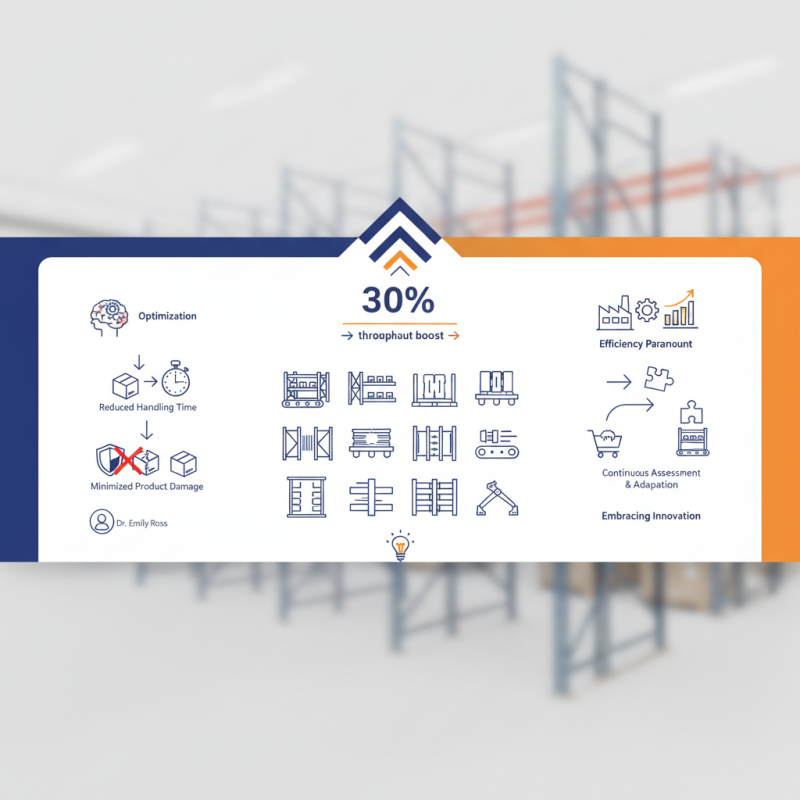
In today’s fast-paced logistics industry, efficiency is paramount. Companies are increasingly seeking ways to improve loading and unloading efficiency using racking systems. According to a recent report by the Warehouse Efficiency Association, optimizing storage solutions can enhance throughput by up to 30%. This statistic underscores the crucial role that effective racking solutions play in warehouse operations.
One industry expert, Dr. Emily Ross, emphasizes this point: “Implementing advanced racking systems can significantly reduce handling times and streamline processes.” In her research, she indicates that using optimized racking can also minimize the likelihood of product damage during loading and unloading. Despite these advantages, many businesses still grapple with outdated systems, leading to inefficiencies and higher operational costs.
Improving loading and unloading means more than just new systems; it requires a commitment to continuous assessment and adaptation. Retail warehouses particularly benefit from versatile racking designs. For example, mobile racking can boost space utilization without sacrificing accessibility. Yet, reflections on the limitations of existing strategies are necessary for progress. Embracing innovation in racking could be the key to overcoming these challenges.
Loading and unloading efficiency plays a crucial role in warehouse operations. It directly impacts inventory turnover rates and overall productivity. Efficient systems ensure quick access to items. Poorly designed spaces slow down movements and lead to delays.
Investing in the right racking systems can optimize space and streamline workflows. For instance, using selective racks allows easy access to individual pallets. This design can lessen search times. Certain racking solutions, like drive-in racks, maximize vertical space but might complicate loading processes. The balance between accessibility and storage capacity needs careful examination.
Practical considerations should not be overlooked. Evaluate the varying needs of different products. Over time, assessing workflow patterns will highlight areas for improvement. Engaging employees in these discussions can provide valuable insights. Ultimately, fostering an efficient environment requires ongoing reflection and adjustment.
When evaluating racking systems, understanding their types is crucial. Different setups cater to varying storage needs. Drive-in racks offer dense storage by allowing forklifts access from one end. They maximize space but can complicate inventory management. Cycle times may be longer with fewer aisles.
Selective racks are versatile and easy to access. They allow for direct access to each pallet. This efficiency speeds up unloading and replenishment. However, they require a larger footprint, which could be a downside in tight spaces.
Push-back racks provide a mix of high-density storage and selectivity. Pallets slide along rails, optimizing space and retrieval speed. Yet, they can create bottlenecks if multiple pallets need to be accessed simultaneously. Evaluating your operational flow is essential when choosing the right system. Each type has trade-offs that can impact efficiency and productivity.
| Racking System Type | Load Capacity (kg) | Shelf Height (m) | Ideal Use Case | Efficiency Rating (1-10) |
|---|---|---|---|---|
| Selective Pallet Racking | 1500 | 3.5 | General Storage | 8 |
| Drive-In Racking | 2500 | 4.0 | High Density Storage | 9 |
| Push Back Racking | 2000 | 4.0 | Bulk Storage | 8 |
| Cantilever Racking | 3000 | 5.0 | Long Material Storage | 7 |
| Mobile Racking | 1500 | 3.0 | Variable Storage Needs | 9 |
| Vertical Racking | 1000 | 2.5 | Small Parts Storage | 8 |
| Shelf Racking | 500 | 2.0 | Retail Storage | 7 |
| Mezzanine Racking | 2000 | 6.0 | Extra Floor Space | 9 |
| Tiered Racking | 1200 | 3.0 | Seasonal Inventory | 8 |
| Automated Racking | 3000 | 5.0 | High Efficiency Environments | 10 |
When choosing a racking system, several factors come into play to enhance loading and unloading efficiency. Understanding the warehouse dimensions is essential. A study by the Material Handling Industry (MHI) reveals that improper space utilization can lead to a 20-30% loss in operational efficiency. This data emphasizes the need for tailored solutions that fit specific warehouse layouts.
Load capacity is another critical element. The racking system must support your typical loads. An inadequate system can cause safety hazards. A report from the Occupational Safety and Health Administration (OSHA) indicates that 21% of warehouse-related injuries stem from improper racking configurations. Regular assessments of load requirements help in choosing a suitable design.
Accessibility should not be overlooked. The layout should allow easy access to products. Inefficient systems can lead to slower operations and increased labor costs. Data suggests that optimizing access points can improve picking speeds by up to 15%. Regular evaluations and adjustments can ensure the racking system maintains its intended efficiency and safety, highlighting the need for ongoing reflection in your choice of racking systems.
In the logistics industry, efficient loading and unloading is vital. A recent survey indicated that businesses can improve their productivity by up to 30% through effective racking systems. These systems are designed to enhance space utilization and streamline the workflow.
One prominent type is the selective pallet racking system. This allows direct access to each pallet. Another option is the drive-in racking system, which maximizes storage density. It enables forklifts to access pallets directly from the aisle. Meanwhile, automated racking systems utilize robotics for better speed and accuracy. Reports show that automation can reduce loading times by up to 50%. Features like adjustable shelving provide flexibility for various storage needs.
However, certain aspects warrant reflection. Costs associated with high-tech systems might not always justify the benefits for smaller operations. Some businesses experience increased maintenance needs with advanced mechanisms. Balancing cost and efficiency is crucial. Evaluating unique operational needs can lead to better racking solutions. It's essential to choose wisely and adapt racking systems as demands evolve.
Implementing an efficient racking system is crucial for warehouses. Start by analyzing your space. Measure heights, widths, and depths accurately. This sets the foundation for optimal layout. The ideal system should facilitate easy access to goods. Consider flow patterns for loading and unloading. It plays a major role in reducing transit times.
Training your staff is essential. Ensure they understand the racking system. Regular training sessions can prevent mishandling of goods. Mistakes can lead to accidents and damage. Establish clear protocols for usage. This promotes safety and efficiency.
Monitor performance continually. Collect data on loading and unloading times. Identify bottlenecks. Regular reviews help in pinpointing areas for improvement. Adapting to changes in inventory or demand requires flexibility. Being open to feedback can drive progress. Emphasize a culture of continuous improvement within your team.
: Loading and unloading efficiency impacts inventory turnover and overall productivity, affecting operations significantly.
Proper racking systems optimize space use and streamline workflows, ensuring quicker access to items.
Drive-in racks maximize vertical space but complicate loading and inventory management due to fewer aisles.
Selective racks allow direct access to pallets, speeding up unloading and replenishment, but need more space.
Evaluate product needs and workflow patterns; different systems have unique benefits and limitations to assess.
Regular training prevents mishandling and promotes clear protocols, which enhances safety and operational efficiency.
Continuous monitoring helps identify bottlenecks and areas for improvement, driving overall efficiency.
Being open to feedback encourages adaptation and innovation, fostering a culture of continuous improvement.
Push-back racks can create bottlenecks when accessing multiple pallets simultaneously, affecting productivity.
Ongoing reflection and adjustment lead to better workflows and operational efficiency over time.
In the realm of warehousing, improving loading and unloading efficiency is crucial for optimizing operations and enhancing productivity. Understanding various types of racking systems is essential, as they play a significant role in facilitating better organization and accessibility of goods. When choosing a racking system, key factors such as space utilization, load capacity, and ease of access should be considered to ensure the right fit for specific needs.
The top 10 racking systems highlighted in this article demonstrate features and benefits that can significantly boost operational efficiency. By implementing best practices when setting up these systems, warehouses can effectively improve loading and unloading efficiency using racking systems. Emphasizing the strategic design and arrangement of racking can streamline processes, reduce handling times, and ultimately lead to a more efficient warehousing operation.

Asia Racking