In the contemporary industrial landscape, commercial real estate constraints have forced a structural migration from horizontal warehouse expansions to vertical volume maximization. Overhead storage systems—encompassing structural steel mezzanines, heavy-duty teardrop pallet racks, and intelligent gravity flow channels—have transitioned from simple storage utilities to primary assets in modern material handling ecosystems. As global supply chains face volatile consumer demand and skyrocketing lease rates, the mathematical reality of cubic space optimization has become the cornerstone of high-yield facilities.
For multinational corporations and distribution hubs, sourcing these massive structural solutions requires deep collaboration with qualified overhead storage exporters capable of executing complex engineering designs, navigating regional building codes, and managing complex international logistics. Overhead racking is no longer a localized purchase; it is a globally sourced infrastructure investment designed to guarantee high-density capability and continuous throughput.
The integrity of an overhead storage system is defined by its mechanical resistance to static, dynamic, and seismic forces. Industrial rack manufacturers utilize advanced finite element analysis (FEA) to simulate high-load states under dynamic conditions. Key to this process is the utilization of cold-rolled steel profiles with high yield stress, primarily Q235B and Q355B grades. These materials allow the structure to achieve high flexural strength without excess deadweight, minimizing the load exerted on the warehouse concrete slab.
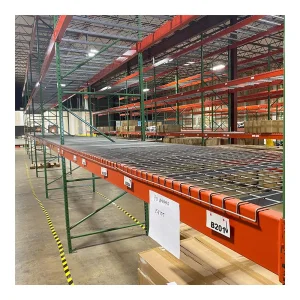
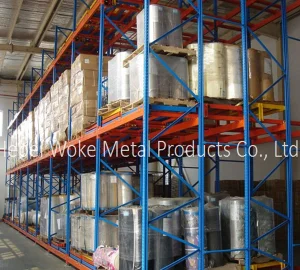
Engineered systems like the *Heavy Duty Storage Warehouse Teardrop Selective Pallet Rack* incorporate specialized connection points. The teardrop design allows the beam-to-frame connection to automatically lock, providing resistance to vertical upward forces caused by forklift accidents. Furthermore, structural uprights must be configured with specific baseplate thicknesses and anchored with heavy-duty mechanical or chemical anchors to distribute the load according to regional building code metrics.
| Storage System Type | Typical Load Capacity | Ideal Application Profile | Cubic Space Utilization Rate |
|---|---|---|---|
| Selective Pallet Racking | 1000 - 3000 kg / Pallet | High SKU variety, 100% selectivity required | 40% - 50% |
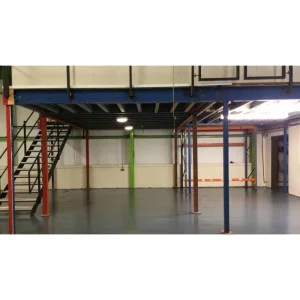
| Structural Mezzanines (SP273) | 300 - 1500 kg / sqm | Assembly zones, office space integration, archiving | Up to 100% (doubles/triples footprint) |
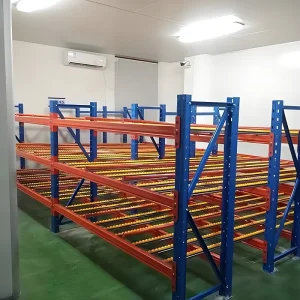
| Gravity Flow & FIFO Racks | 500 - 1500 kg / Lane | Perishable items, high-density batch handling | 70% - 85% |
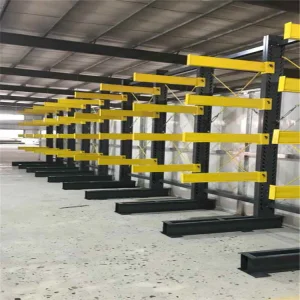
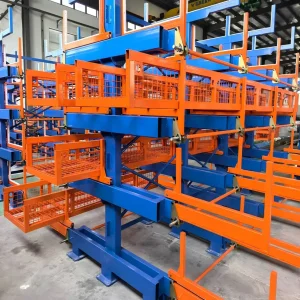
| Cantilever Racking Systems | 500 - 5000 kg / Arm | Long lumber, pipes, structural steel, sheet metals | 60% - 75% |
Exporting heavy-duty structural steel products requires strict alignment with localized architectural laws and product certifications. For North American distribution channels, racking systems must conform to the **Rack Manufacturers Institute (RMI) MH16.1 standard**, detailing stability criteria and beam deflection formulas. In the European Economic Area, the **EN 15512 standard** dictates the structural design criteria for adjustable pallet racking, alongside **CE and FEM 10.2.02 regulations** governing safe working practices and assembly tolerances.
To ensure high durability during intercontinental transit, exporter-grade packaging is essential. Standard shipments incorporate rust-prevention coatings and heavy-duty wrapping. Every upright frame, beam bundle, and accessory is meticulously grouped and bound to withstand marine transit conditions. Automated electrostatic powder coating lines apply a resilient epoxy-polyester finish to prevent oxidation in high-humidity port environments and temperature-controlled storage spaces.
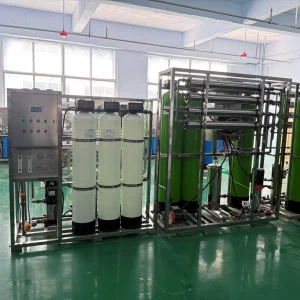
Modern facility optimization requires integrating storage infrastructure with essential plant utilities. For example, exporting a Certified RO System for Global Market Export involves engineering durable modular support frames. Cleanroom environments and water purification plants require specialized structural racks to house heavy reverse osmosis membrane tubes and high-pressure pumping assemblies safely.
Similarly, agricultural facilities are shifting toward vertical operations. The *Indoor Office Nft Hydroponics Growing System for Fresh Daily Edible Greens* utilizes heavy-duty racking frames configured to support automated lighting, fluid circulation tubes, and high-density growth trays. This setup maximizes yield per square meter by extending the growing footprint vertically.

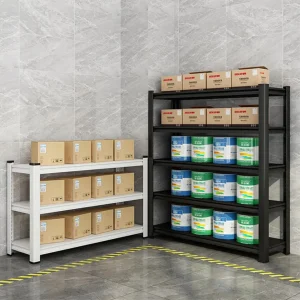
We use only the highest quality steel to create each set of shelves, ensuring that you can see the quality of our products at a glance.

We strictly control every production process to meet your supply needs on time, quality, and quantity, so you can trust that you're getting the best possible product.

We specialize in creating professional and suitable storage rack solutions that are tailored to meet the unique needs of your warehouse.

We have a complete after-sales service system that includes one-to-one support to quickly handle any issues that may arise, so you can rest assured that you're always in good hands.
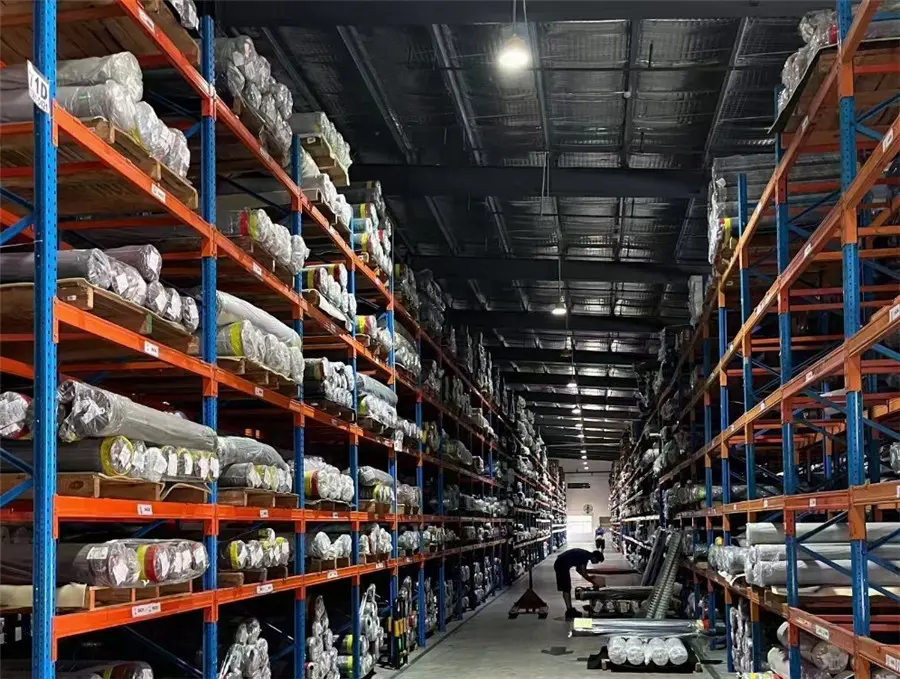
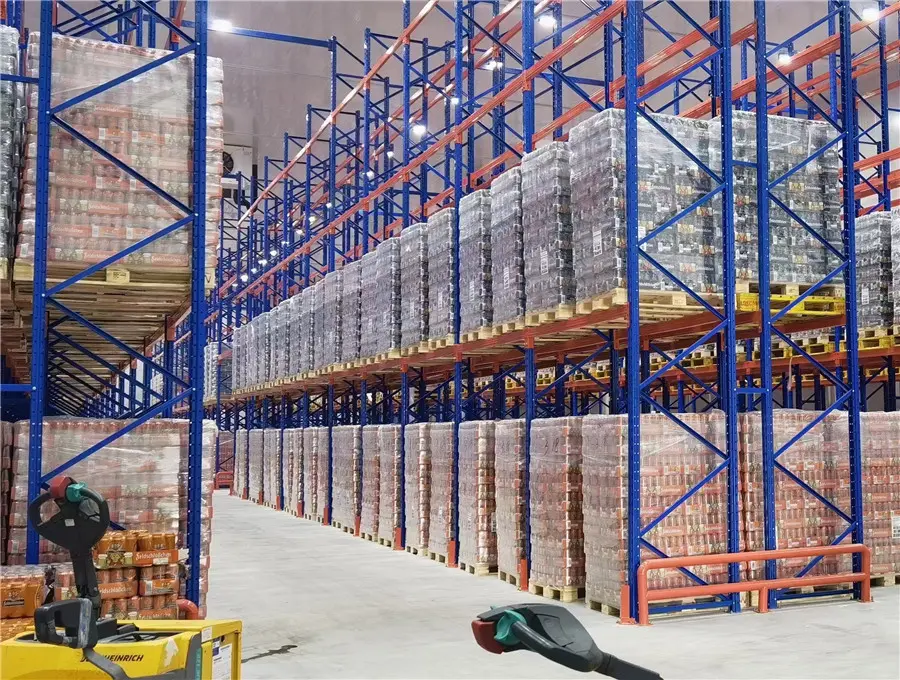
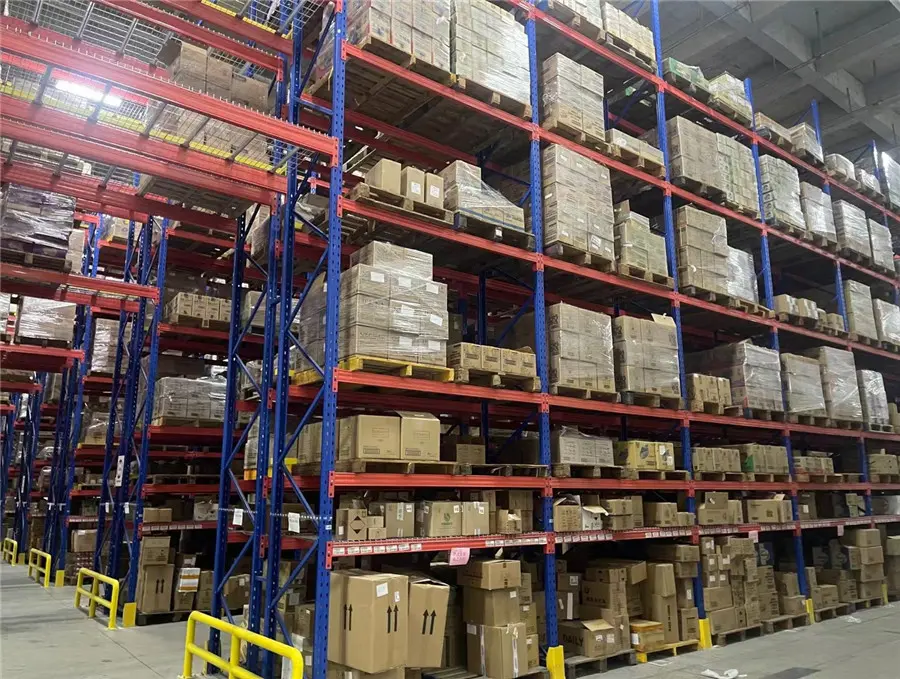
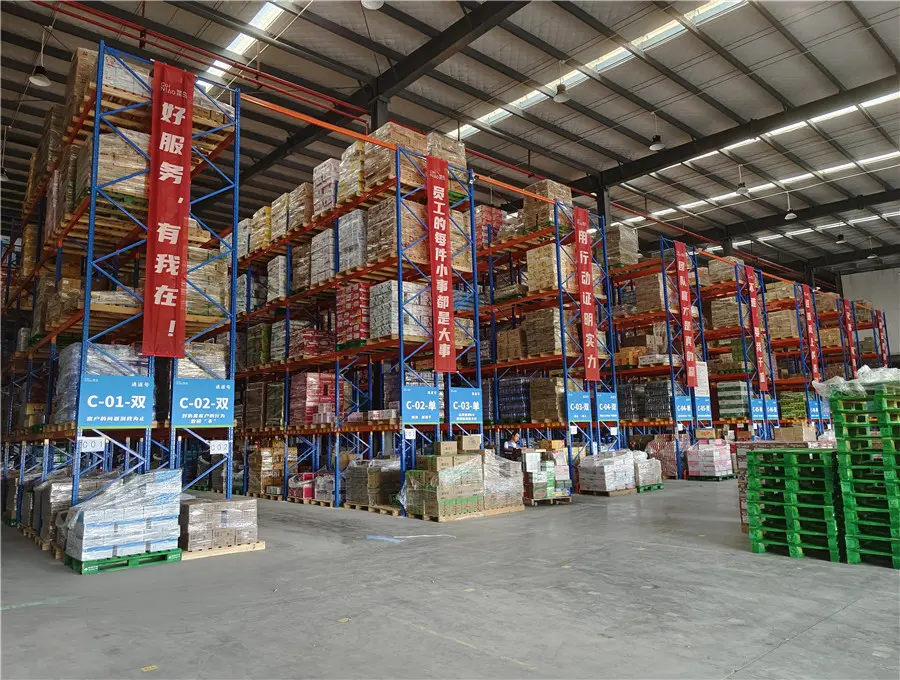
Asia Racking is dedicated to delivering the widest selection of warehouse equipment available anywhere. We have both new and used equipment and can also mix and match both to meet your needs. Paired with our outstanding customer service and competitive pricing, there is no other supplier anywhere who will serve your needs better or more efficiently.
Our core mission is to empower enterprises globally with top-tier industrial shelving and racking configurations that adapt to dynamic material workflows. Whether you need a standard pallet rack system, a gravity-fed carton flow line, or high-capacity cantilever racking for heavy structural loads, our engineering and sales offices deliver customized drawings and fast turnaround times.
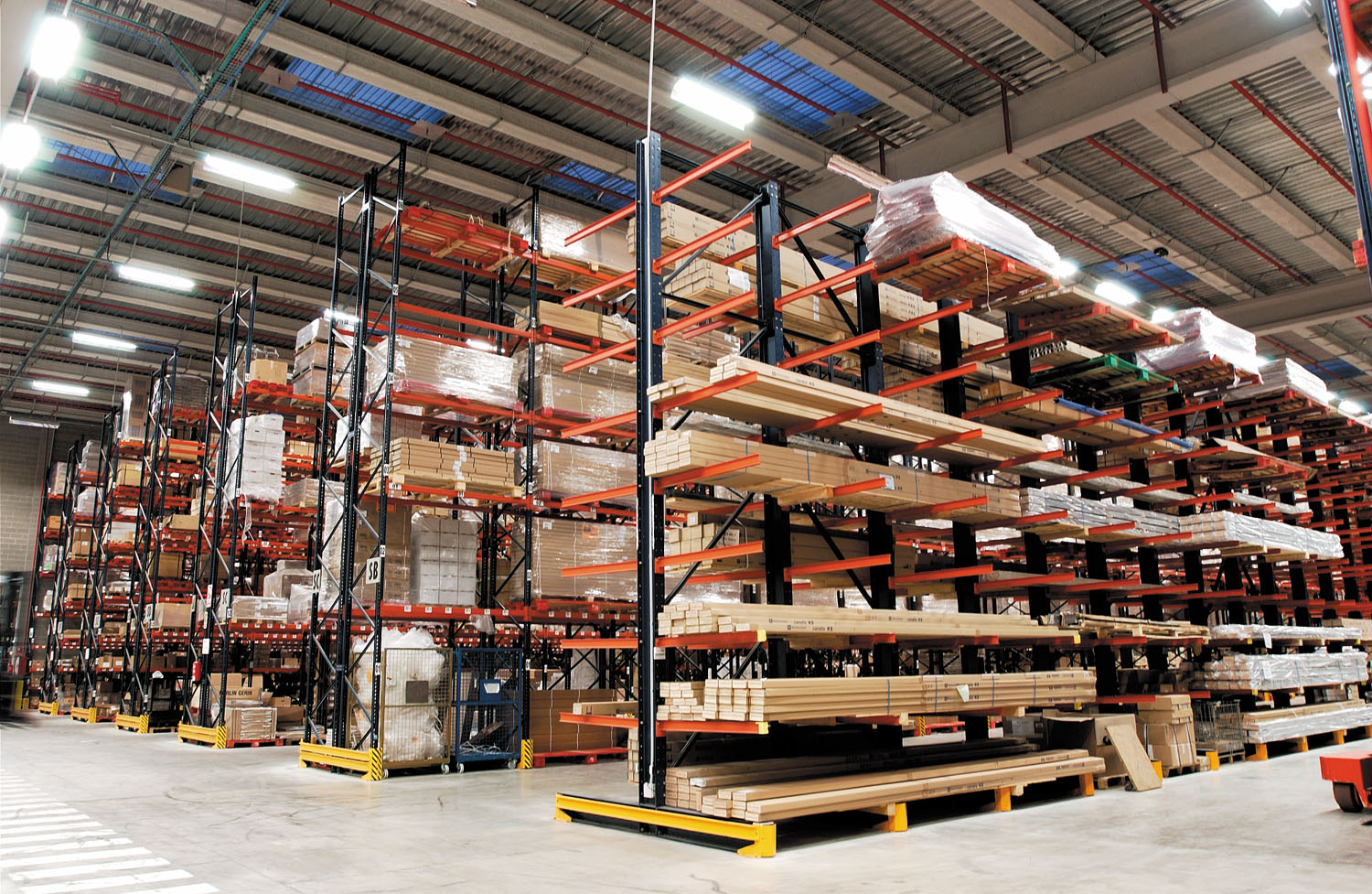
The integration of automation is changing the design of modern racking structures. Instead of relying solely on manual forklifts, facilities are adopting Automated Storage and Retrieval Systems (ASRS) and Autonomous Mobile Robots (AMRs). Racking structures must now be built to higher tolerances, ensuring precise level alignment and straightness under full load conditions.
In dynamic warehouses, integrating sensor arrays directly into uprights and beams allows operations to track load stresses in real time. This preventive safety measure alerts teams before structural issues arise. Eco-friendly manufacturing, using recycled alloy blends and low-emission powder coatings, also helps companies meet their global sustainability targets.
Loading capacity depends on beam profile depth, column grid spacing, floor material (e.g., steel grating or MDF panels), and dynamic load calculations. Designing systems like the SP273 requires assessing the warehouse concrete floor's load-bearing capacity to ensure the concentrated column weight is distributed safely.
Q355B is a low-alloy, high-strength structural steel. It offers a balanced ratio of weight to structural yield strength, making it ideal for tall pallet racks and cantilever systems. This strength allows profiles to carry heavier loads without requiring excessively thick steel beams.
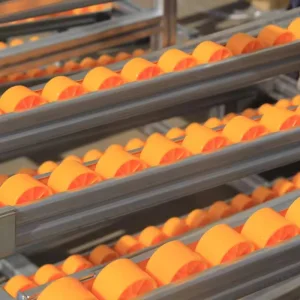
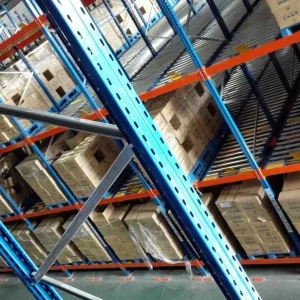
FIFO (First-In, First-Out) systems use inclined roller lanes to automatically slide incoming pallets or cartons to the picking face. This reduces travel time for forklifts, ensures stock rotation, and maximizes space utilization by eliminating intermediate access aisles.
Our export protocols include wrapping all structural parts in protective film and packing them in durable, sea-safe bundles. The electrostatic powder coating serves as a primary barrier against moisture and corrosion in high-salinity marine environments.

 Asia Racking